Sanitary napkins, in the end is made of what materials?
Disposable sanitary napkins are almost a public product for women. In recent years, sanitary napkins have repeatedly ignited public topics. But under such heat, if you interview 10 women around you, it is estimated that at most one person can vaguely explain what kind of material sanitary napkins are made of. In a consumption-oriented society, we recognize a product more from the perspective of user experience. When you encounter something you particularly like or need, you will enter the stage of “knowing it and knowing why”. Therefore, not knowing is the norm.
Classification of disposable sanitary napkins
-
Regular sanitary napkins
-
Liquid sanitary napkins
-
GOTS Certified Organic Cotton Sanitary Pads
Among them, the first ordinary sanitary napkins accounted for 95%+ of the global sanitary napkin market. It is also the focus of this article. We will use a separate article to introduce GOTS organic cotton sanitary napkins. Its structure is exactly the same as that of ordinary sanitary napkins, but the materials used are different. Liquid sanitary napkins refer to sanitary napkins made of Procter & Gamble’s patented material FlexFoam, an exclusive product of Procter & Gamble. We will also use a separate article to introduce liquid sanitary napkins and the controversy surrounding this new material.
Next, let’s just talk about regular sanitary napkins
The structure of sanitary napkins
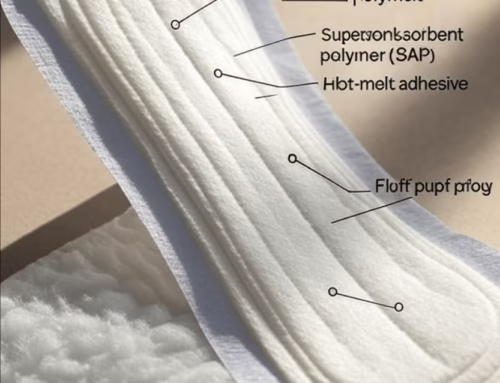
There are 3 layers in total, from top to bottom, they are surface layer, absorbent layer, bottom film
First layer
Top layer: close to the skin. Menstrual blood seeps through the top layer and seeps down to the absorbent layer. The material of the surface layer, the core is 2 categories: plastic and cotton.
- Plastic surface
- 1.Common dry surface layer, polyethylene (PE). The production process is similar to plastic film.
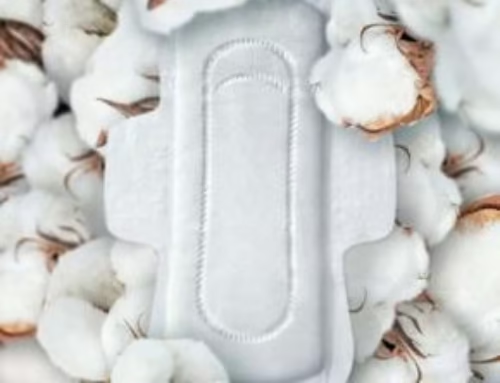
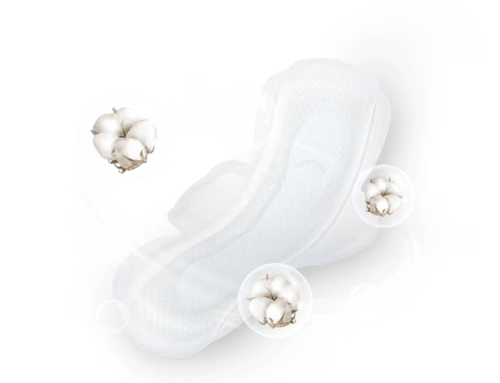
- 2.100% cotton, made of cotton non-woven fabric.
Other surface materials exist, but are less common, including:
Hemp, a natural hemp fiber, has antibacterial effect
PLA, polylactic acid. Corn starch, through a series of chemical actions, becomes PLA, which can be made into a film. Biodegradable plastic bags are now basically produced by mixing PLA and PBAT. PLA, we will talk about it in a separate article. PLA is plant-based and degradable. It has been very popular in the past 10 years, but there are also some limitations.
3. Silk, I have only heard of it, but have not seen the real thing.
Second layer Absorbent layer
The absorbing layer can be subdivided into many layers. But no matter how they are divided, they all serve one goal: to absorb menstrual blood.
The material of the absorbing layer is basically only the following two:
Fluff pulp
Polymer Absorbent Resin (SAP)
The combination of these two materials has derived some new composite materials, such as: dust-free paper.
The absorption capacity of sanitary napkins depends on the amount of SAP added. In the past 20 years, there has been no fundamental breakthrough in the material of sanitary napkins, so it has begun to roll in who absorbs more, who absorbs faster, and who is the dryest. These are all determined by: SAP, which layer is placed on the sanitary napkin, and how much is placed. Regarding SAP, we will also write a separate article to discuss it.
The third layer of bottom film
The bottom film, everyone should be able to feel it, is a layer of plastic. The material of this layer of plastic is polyethylene PE, which is the same as the surface layer of the dry mesh surface. Although the raw materials are all PE, the process is different, and two films that look completely different are produced. The past, present, and future of plastics is an interesting topic that is closely related to everyone. Some industry experts to write about the development prospects of environmentally friendly plastics when there is an opportunity later.
The materials of the bottom film of the other two kinds of sanitary napkins are as follows.
- Organic cotton sanitary napkins certified by GOTS, with 100% biodegradable film. There are clear regulations in the organic certification standards.
- Liquid sanitary napkins, like regular sanitary napkins, are made of plastic.
Other auxiliary materials for sanitary napkins
Hot-melt adhesive
Sanitary napkins are multi-layered and must be bonded with hot-melt adhesive. The amount of glue used is very small, but it is indispensable in the current sanitary napkin production technology. Hot melt adhesive is a kind of resin, which is solid at normal temperature and becomes liquid at 120-160 degrees, sprayed into filaments for bonding. In principle, resin is also a polymer chemical, which is non-toxic at room temperature and will not irritate the skin. However, among the people who are allergic to sanitary napkins we have come into contact with, 2 cases are highly suspected to be allergic to a certain substance in hot melt adhesive.
Release paper:
When using sanitary napkins, tear off the paper. This paper is a composite, coated with a layer of silicone oil, to achieve the isolation function.
Each piece of independent packaging film: most brands use plastic. A small amount of composite paper laminated with plastic and paper is used. Organic cotton sanitary napkins must be made of 100% biodegradable plastic.